Gemini 3.7 Flash, DeepSeek Harness, Grok 4.6
QWen 3.8, How Claude's Watermark works

After a bit hiatus, back to original programming! We have so many model releases in the last two weeks, so will cover them in no specific order!
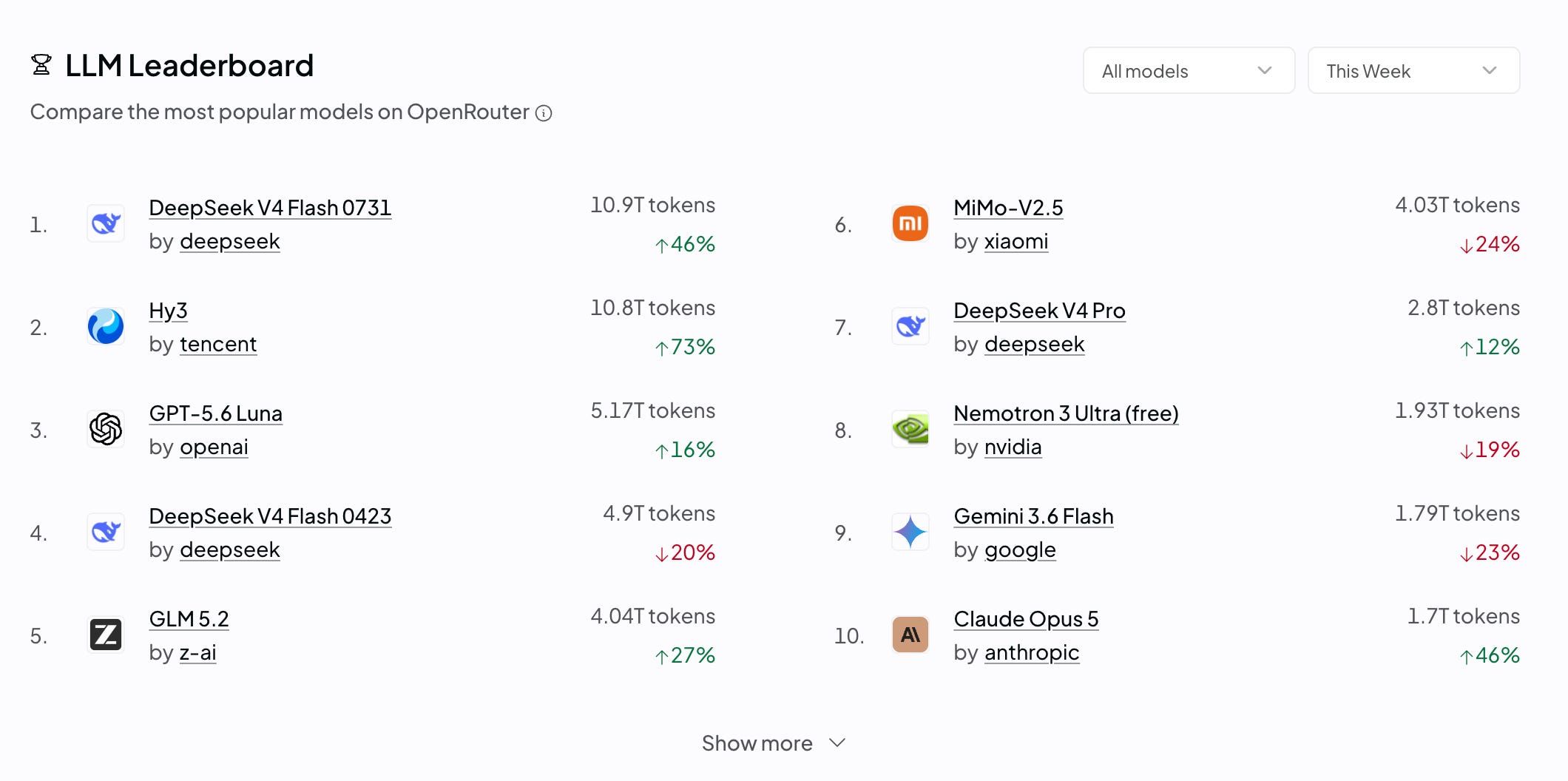
We have seen tremendous amount of progress in LLM world, and also open models in the last two weeks. Just to recap last week, OpenRouter has the following list of models per usage as of this writing(2026/08/15):
Qwen 3.8 is released last week as well which has the following capabilities:
Core Capabilities: Comprehensive improvements across coding, professional work, research, and long-horizon agentic tasks.
Agent Execution: Stronger autonomous planning and better handling of environment feedback, leading to more reliable end-to-end task completion.
Downstream Compatibility: Broader support for popular harnesses and development tools, making it easier to integrate into your existing stack.
Flexible Thinking Control: Reasoning depth can be tuned with
reasoning_effort, and reasoning context from historical messages is retained viapreserve_thinking.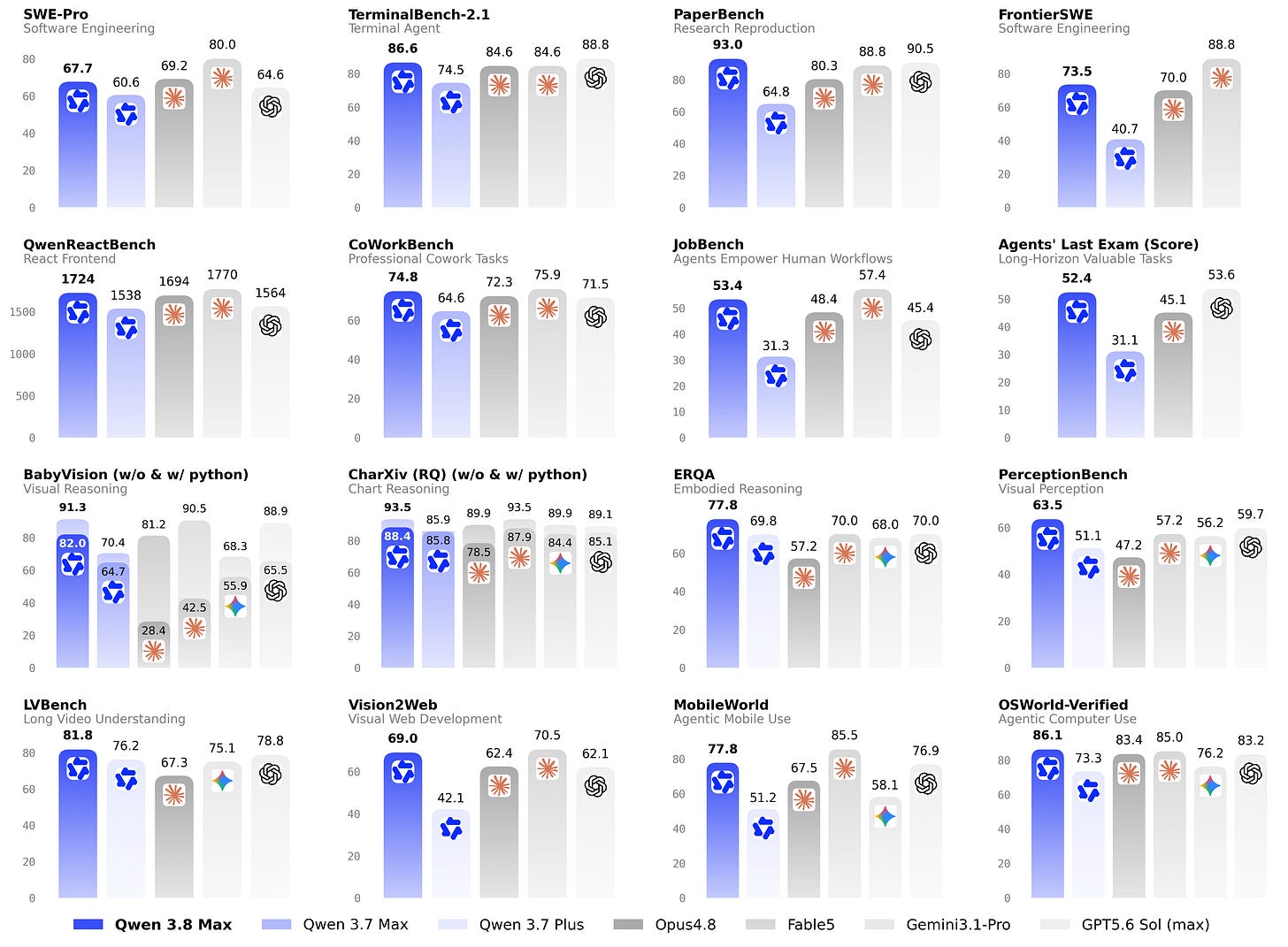
Model weights(fp8, bf16) can be retrieved from here.
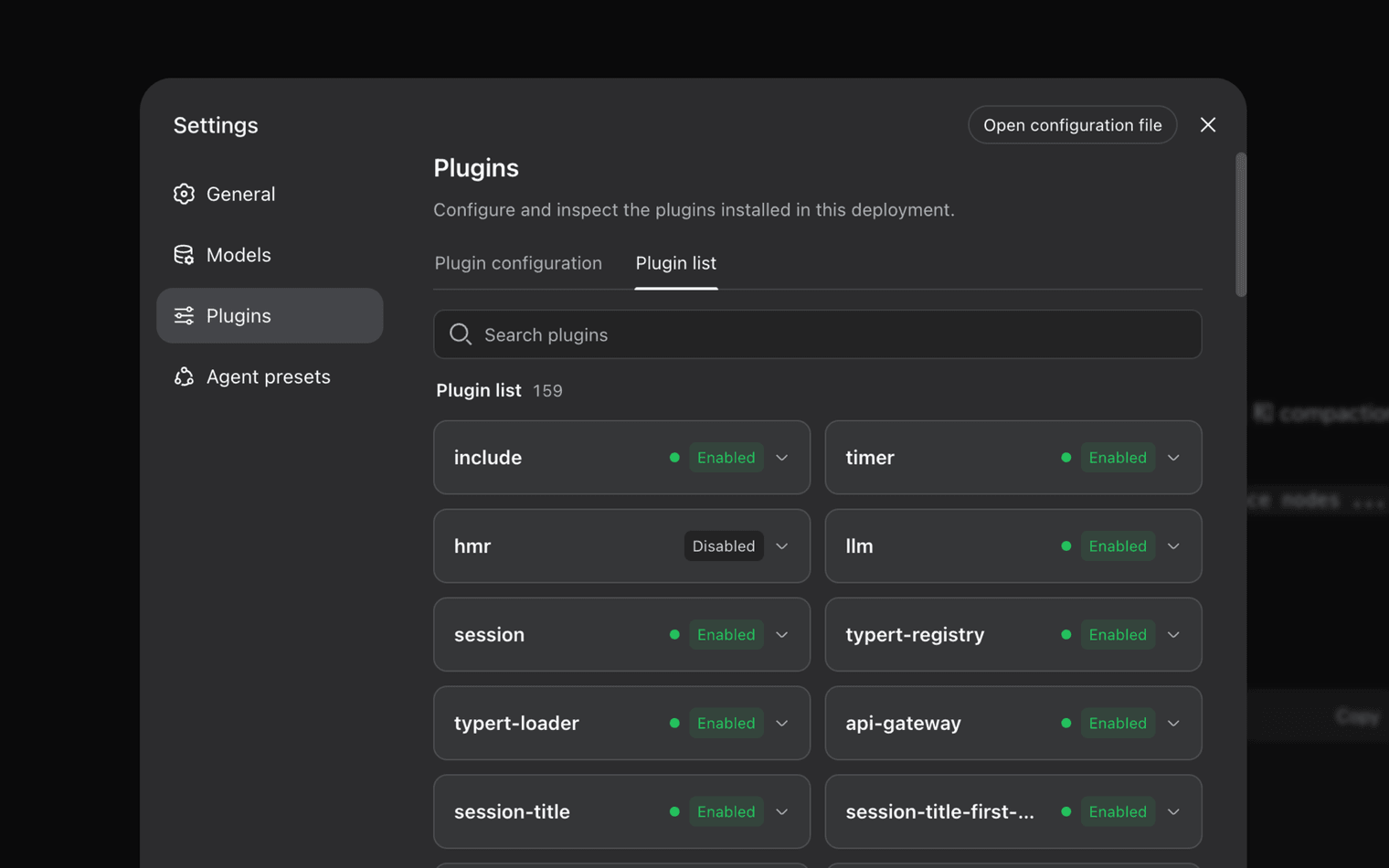
DeepSeek published their own harness. In this harness, they consider all of the capabilities as plugins to be able to create multiple capabilities, you need to “install” these plugins.
The plugins live in the Cordis kernel which manages plugin mounting, unmounting, and dependencies. This is kind of a control plane where all of the plugins(capabilities) register against Cordis kernel and Cordis kernel is able to orchestrate all of the capabilities in consistent manner. Cordis paper is available here.
With all of the other harnesses, everything the model sees is recorded in an append-only session log: system prompts, reasoning, tool calls and results, subagent scheduling, and every context injection. In the Trajectory view, you can inspect these records by source. Resume, fork, search, and replay all operate on the same event stream.
The code is available in GitHub. Developer docs(a bit light) is also available in GitHub pages.
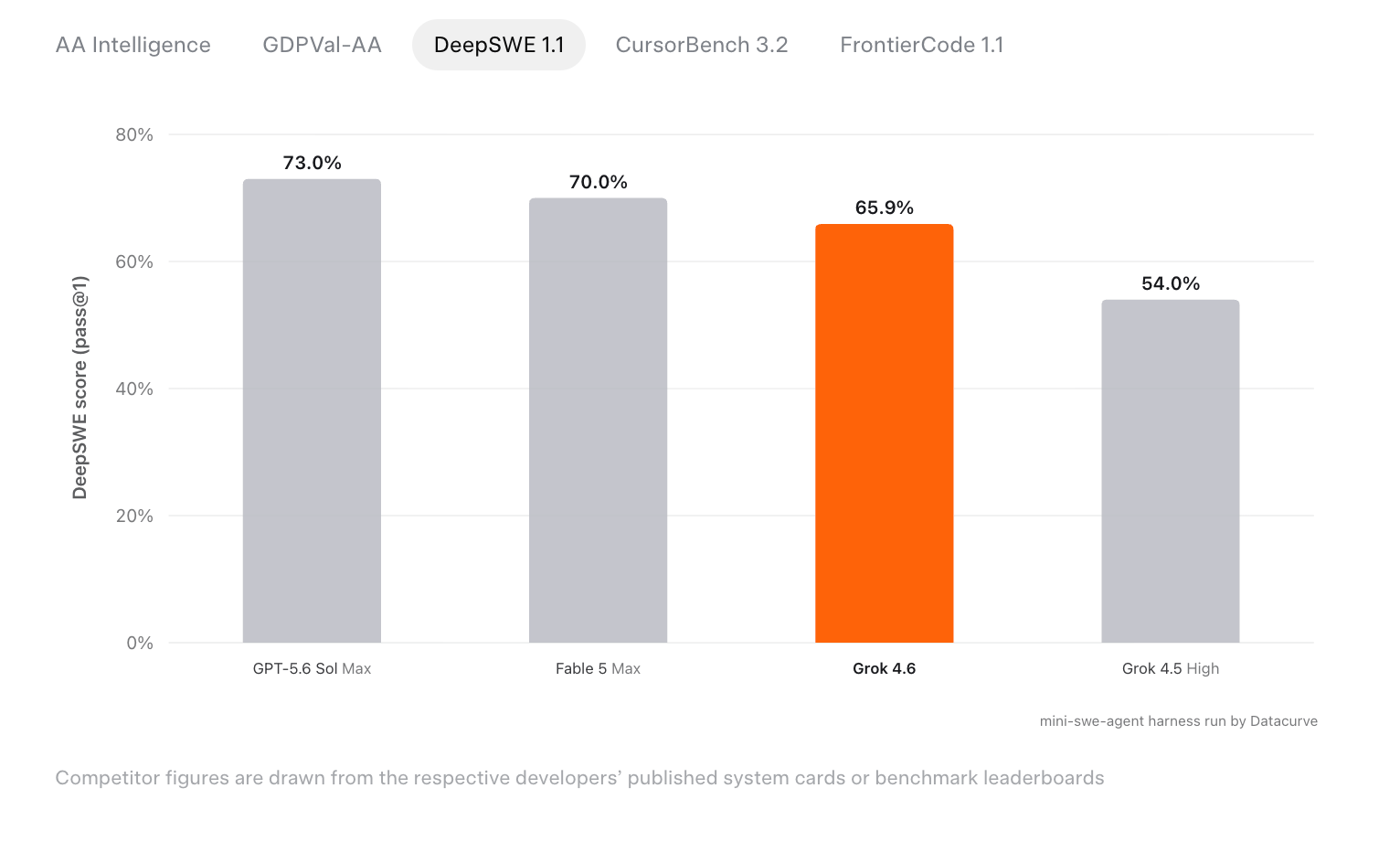
Grok 4.6 is also released last week. Grok is closely following all of the other closed-source models well for a while, but could not move to the driver seat where Fable 5 Max currently sits.
Grok 4.6 builds on Grok 4.5 with a particular focus on long-running agents and more interactive and visual work. It stays with complex tasks across many steps, whether researching a topic, analyzing information, working across a codebase, or turning an idea into a polished application or work artifact. It can be accessed through Cursor or Grok Build.

Google released Gemini 3.7 Flash, it has improved better reasoning and accuracy for knowledge-dense fields like finance, law, and biosciences comparing to 3.6. It significantly outperforms 3.6 Flash on the GDP.pdf benchmark (34.0% vs 22.0%), an eval for testing a model’s ability to process complex documents. It also surpasses 3.6 Flash in AutomationBench, demonstrating it can more effectively complete real-world business workflows (30.4% vs 17.0%).

It is also quite cost-efficient comparing to other proprietary models, the open source models are much more cheaper, though.
The following has much more detailed benchmarking comparing to other models as well:

Declaude is an interesting website that “declaude” the text that is generated by Claude. It has also a post on how the watermarking that Claude does works which is very interesting.
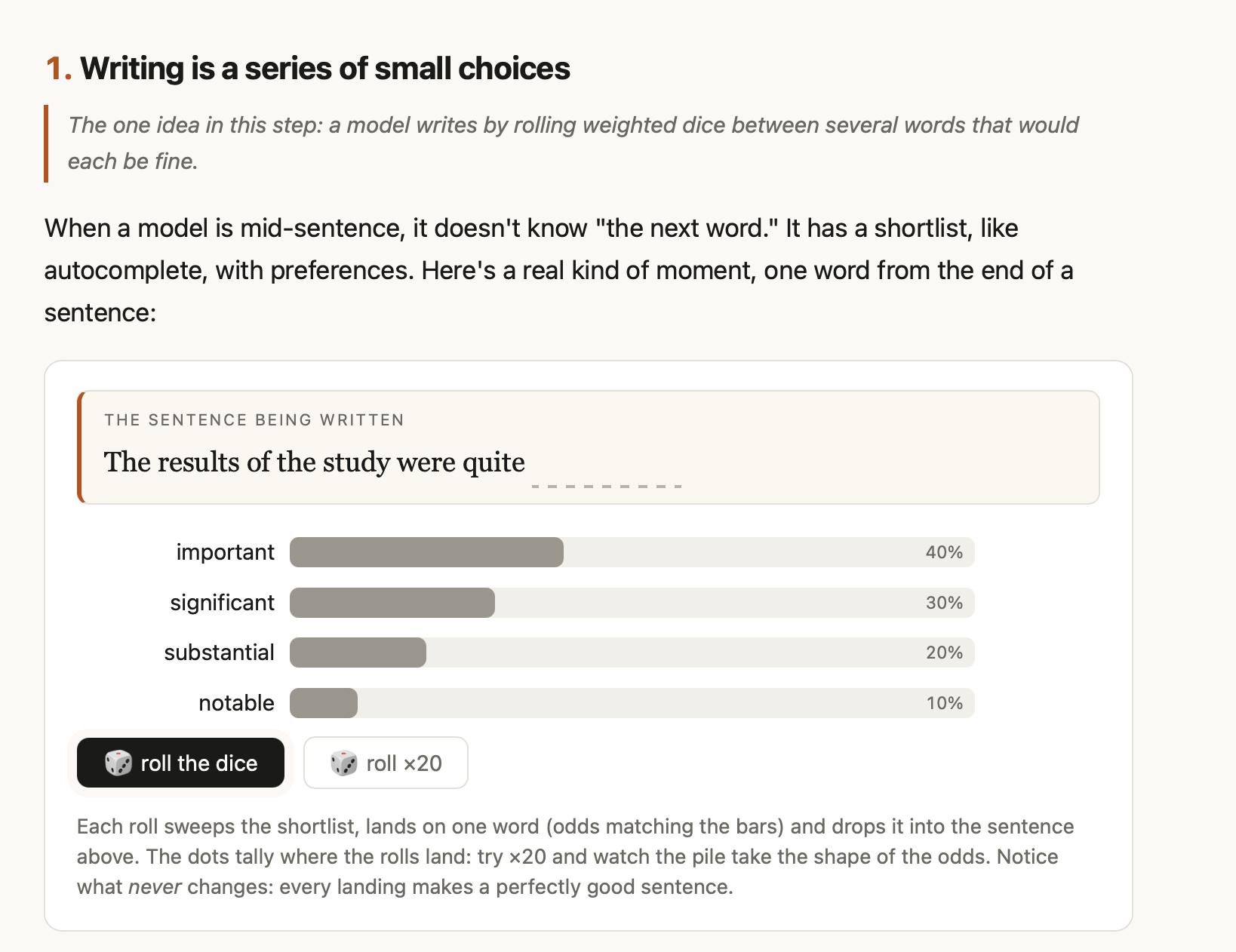
The detector operates by using a secret key to assign the same token coloring(red, green) to a given passage. It then checks whether “green” tokens occur more often than would be expected by random chance. When the text is unwatermarked or the key is wrong, the “green” to “red” token ratio should be close to 50/50. In watermarked text, the increased count of green tokens yields a statistical score. This procedure leads watermark detection through the following mechanisms:
Key-gated: External parties may run the detector only if they possess the secret key or have access to the official detection service.
Probabilistic: Longer passages supply more evidence. Short texts frequently lack sufficient data for a confident result.
Content-agnostic: The system does not assess writing style or meaning. It only searches for the specific signal generated during creation.
In context-dependent systems, each token’s status relies on the text that directly precedes it. Editing a passage disrupts the context window around the alteration, rendering local evidence unusable. Nevertheless, portions of the original wording that stay unchanged can still be detected.
Light editing or standard paraphrasing: These actions frequently weaken the watermark. A detector can still locate the signal if sufficient token sequences stay intact, particularly in long documents.
Full recomposition: Rewriting a passage based on its meaning rather than preserving the original wording can eliminate the contextual overlap required by these systems.
A probabilistic scheme that can measure various degrees of confidence even in the presence of editing is a robust method to understand if the text is generated. However, because it also has a lot of control on the text, I’d imagine this would be hard to understand and track over multiple/many versions of the models as one has to understand the “green” and “red” tokens and their rough distribution per versions of different models.